

The Complete Guide to Design, Materials, Performance, and Long Term Care
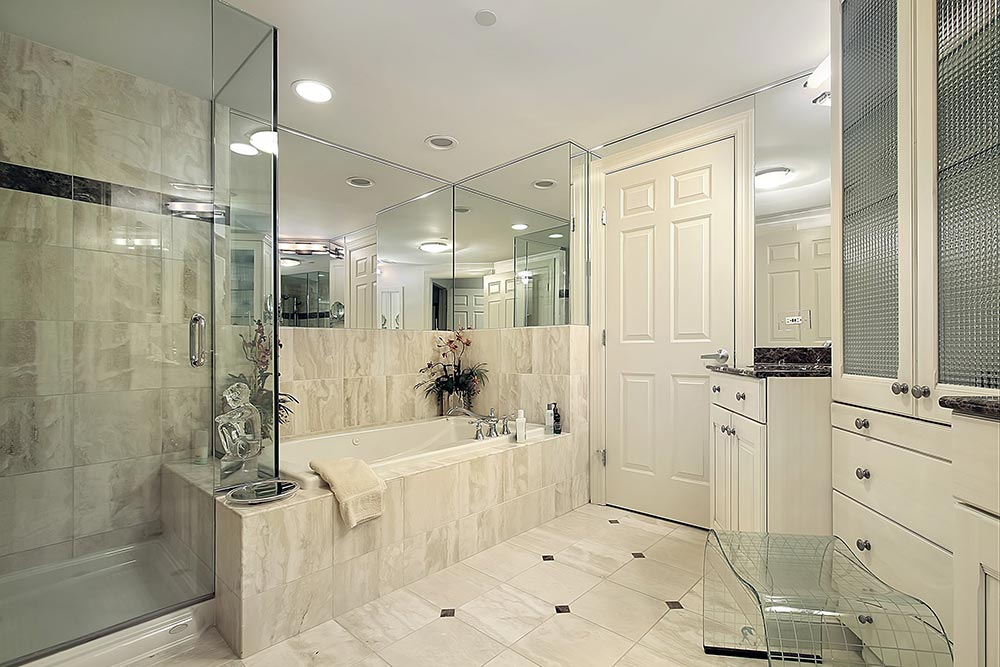
A marble inspired bathroom represents more than a visual trend it is timeless design, architectural elegance, and material authenticity combined. When done correctly, natural stone transforms a bathroom into a refined, spa level environment that endures beautifully for years.
But lasting results require more than choosing the right stone. Placement, finish, waterproofing, and maintenance all play a critical role. Whether you are hiring a professional bathroom remodeling service or working with a designer, this guide will help you make the right decisions from the start. Not sure how to find the right team? Here’s what to look for when choosing a remodeling contractor.
Why Marble and Natural Stone Remain a Design Standard
Marble and natural stone have been used in architecture for centuries because they offer three qualities that synthetic materials struggle to replicate:
• Depth and organic variation
• Light reflection with natural movement
• A sense of permanence and quality
Modern bathroom design continues to embrace marble inspired aesthetics because they integrate seamlessly into multiple styles:
• Contemporary minimal
• Transitional
• Classic European
• Modern spa
• Luxury hotel inspired
The key is not simply choosing marble. The key is selecting the right stone, finish, and application for your specific space.
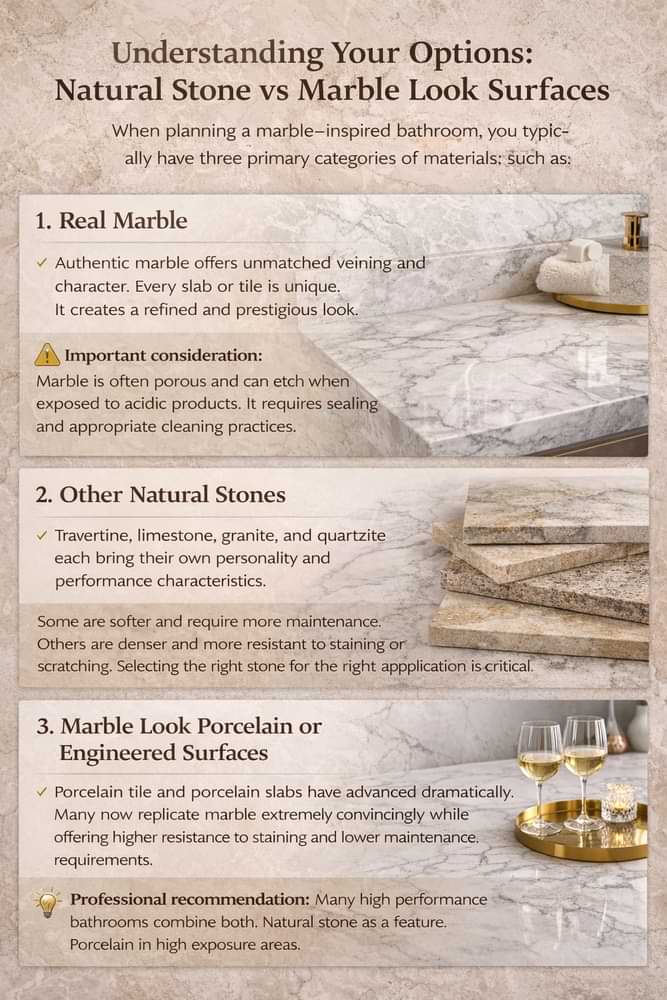
Understanding Your Options: Natural Stone vs Marble Look Surfaces
When planning a marble inspired bathroom, you typically have three primary categories of materials:
1. Real Marble
Authentic marble offers unmatched veining and character. Every slab or tile is unique. It creates a refined and prestigious look.
Important consideration: Marble is often porous and can etch when exposed to acidic products. It requires sealing and appropriate cleaning practices.
2. Other Natural Stones
Travertine, limestone, granite, and quartzite each bring their own personality and performance characteristics.
Some are softer and require more maintenance. Others are denser and more resistant to staining or scratching. Selecting the right stone for the right application is critical.
3. Marble Look Porcelain or Engineered Surfaces
Porcelain tile and porcelain slabs have advanced dramatically. Many now replicate marble extremely convincingly while offering higher resistance to staining and lower maintenance requirements.
For homeowners who want the aesthetic without intensive upkeep, this is often a practical solution.
Professional recommendation: Many high performance bathrooms combine both. Natural stone as a feature. Porcelain in high exposure areas.
Designing by Bathroom Zones
The Smart Way to Avoid Costly Mistakes:
Every bathroom has different exposure levels to water and wear. Designing by zone improves performance.
Bathroom Floors
Safety and durability come first.
Polished marble floors may look elegant, but they can become slippery when wet. Honed or textured finishes typically provide better traction.
Best practices for stone flooring:
• Choose matte or honed finishes
• Consider smaller tiles in wet areas for additional grip
• Select tones that help conceal water spotting
• Ensure professional installation with correct leveling
Shower Floors
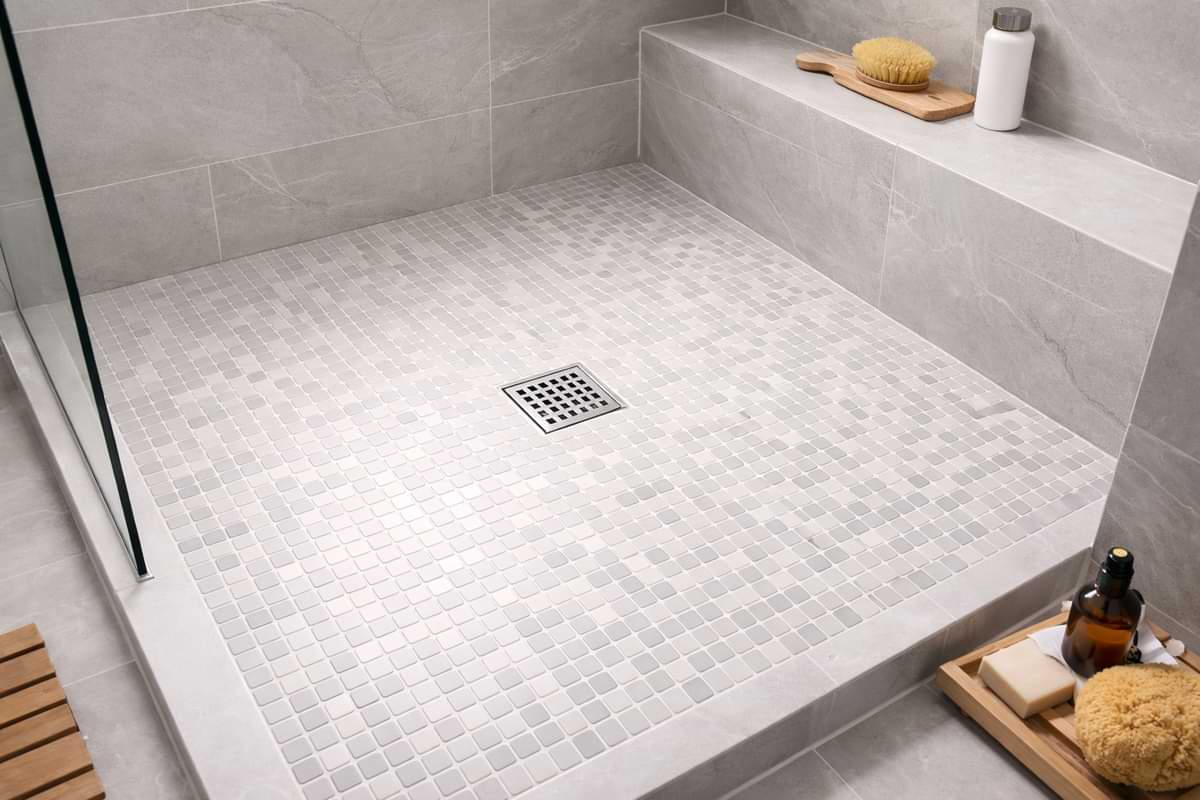
Shower floors require the highest level of technical precision.
Because of slope requirements toward the drain, smaller format tiles or mosaics are often the most effective solution. They allow proper drainage and improve slip resistance.
Key priorities:
• Slip resistant surface finish
• Correct shower pan construction
• Proper waterproof membrane beneath the tile
• Accurate slope toward drain
The visible stone is only as reliable as the waterproofing system behind it.
Shower Walls
Shower walls offer more design flexibility.
Here you can use larger format stone or marble slabs to create dramatic visual continuity. However, soap residue and mineral buildup must be considered.
Maintenance planning is essential if using real marble in this area.
Vanity Tops and Counter Surfaces
Vanity areas are exposed to cosmetics, toothpaste, skincare products, and cleaning agents.
If you choose real marble:
• Expect some patina over time
• Use gentle cleaners
• Avoid acidic products
If you prefer minimal maintenance, engineered stone or porcelain slabs may be better suited for this surface.
Feature Walls and Niches
This is where natural stone truly shines.
A bookmatched marble feature wall or carefully detailed niche can transform the entire space without overwhelming maintenance requirements.
Strategic placement allows you to enjoy authentic stone while maintaining practicality.
Choosing the Right Finish
Why Surface Texture Matters
Stone finish affects:
• Slip resistance
• Light reflection
• Scratch visibility
• Maintenance requirements
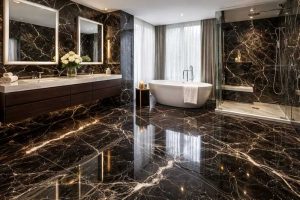
Polished Finish
• Glossy and reflective
• Dramatic and elegant
• Can be slippery on floors
• Shows water spots more easily
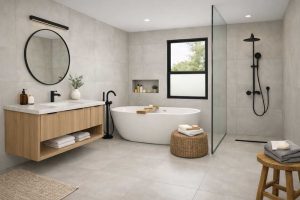
Honed Finish
• Matte and smooth
• More forgiving visually
• Better traction on floors
• Softer, modern appearance
Textured or Brushed Finish
• Enhanced grip
• Ideal for wet areas
• Adds subtle tactile character
For most bathrooms, honed or lightly textured finishes provide the best balance between beauty and performance.
Waterproofing: The Foundation of a Successful Stone Bathroom
Natural stone and tile are not waterproof layers. They are surface finishes.
True protection comes from:
• Properly constructed shower pan systems
• Continuous waterproof membranes
• Sealed seams and corners
• Integrated drain systems
• Correct slope engineering
Ignoring this step leads to hidden moisture damage, structural issues, and expensive repairs.
High end results always begin behind the wall.
Ventilation and Moisture Control
Humidity management is often overlooked.
Without proper airflow, bathrooms can experience:
• Mold growth in grout lines
• Caulk deterioration
• Peeling paint
• Lingering odors
• Accelerated material wear
A well designed bathroom includes:
• Appropriately sized exhaust ventilation
• Timed or humidity sensing fan operation
• Airflow pathways to prevent stagnant moisture
Stone performs best in controlled environments.
Sealing Natural Stone
What It Does and What It Does Not Do
Sealing helps slow absorption of moisture and contaminants. It does not make stone completely stain proof or immune to etching.
Key realities:
• Sealers reduce risk but do not eliminate it
• Resealing frequency depends on usage
• Professional application improves consistency
• Sealing does not replace waterproofing systems
Understanding this distinction prevents unrealistic expectations.
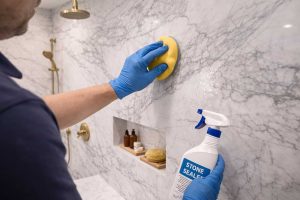
Cleaning and Long Term Maintenance
Maintenance habits determine long term appearance.
Recommended practices:
• Use pH neutral cleaners designed for stone
• Wipe standing water when possible
• Avoid abrasive scrub pads
• Rinse surfaces thoroughly
• Clean consistently rather than aggressively
Avoid:
• Vinegar
• Acidic descalers
• Harsh bleach products
• Abrasive powders
Consistency preserves natural stone far better than occasional deep scrubbing.
Design Strategies That Elevate Marble Inspired Bathrooms
1. Large Format Surfaces
Fewer grout lines create a cleaner, more luxurious appearance.
This is especially effective in smaller bathrooms, see our guide on how to make a small bathroom feel larger.
2. Vein Matching
Aligning marble veining across panels creates architectural impact.
3. Warm Contrast
Combine stone with:
• Natural wood cabinetry
• Soft lighting
• Brushed metal fixtures
• Layered textures
Balance prevents the space from feeling cold.
4. Lighting Integration
Stone changes character depending on lighting.
Use:
• Vertical mirror lighting for even facial illumination
• Recessed ceiling lighting placed intentionally
• Accent lighting inside niches
Lighting should highlight texture without creating harsh glare.
Common Mistakes to Avoid
• Installing polished stone on wet floors
• Relying on tile as the waterproofing layer
• Using harsh cleaners on sensitive stone
• Skipping ventilation planning
• Ignoring edge details and transitions
• Selecting stone without understanding its properties
Attention to detail defines the difference between average and exceptional results.
Budget Considerations
Cost varies based on:
• Type of stone
• Slab versus tile application
• Installation complexity
• Waterproofing systems
• Custom fabrication
• Drain and slope configuration
• Lighting integration
Large format stone slabs and precision vein matching require advanced skill and raise labor costs. However, strategic placement of high impact surfaces can maximize visual value within budget.
For more details about the process, timeline, budgeting, and design considerations, visit our complete bathroom remodeling planning guide to explore everything you need to know before starting your project.
Frequently Asked Questions
Is real marble suitable for showers?
Yes, especially for shower walls, if waterproofing is done correctly and maintenance guidelines are followed. For lower maintenance, porcelain alternatives may be preferred.
What finish is safest for bathroom floors?
Honed or lightly textured finishes generally provide better traction than polished surfaces.
Does all natural stone require sealing?
Most porous stones benefit from sealing. The type and frequency depend on the specific material and usage level.
Can I achieve a marble look without heavy maintenance?
Yes. High quality porcelain tiles and slabs can replicate marble aesthetics with reduced upkeep.
Final Thoughts
An all natural stone or marble inspired bathroom can become one of the most visually striking and emotionally calming spaces in a home. But lasting success depends on informed material selection, professional waterproofing, intelligent finish choices, and realistic maintenance expectations.
When beauty and performance are planned together from the beginning, natural stone delivers elegance that endures for decades.